
Last updated November 2, 2026
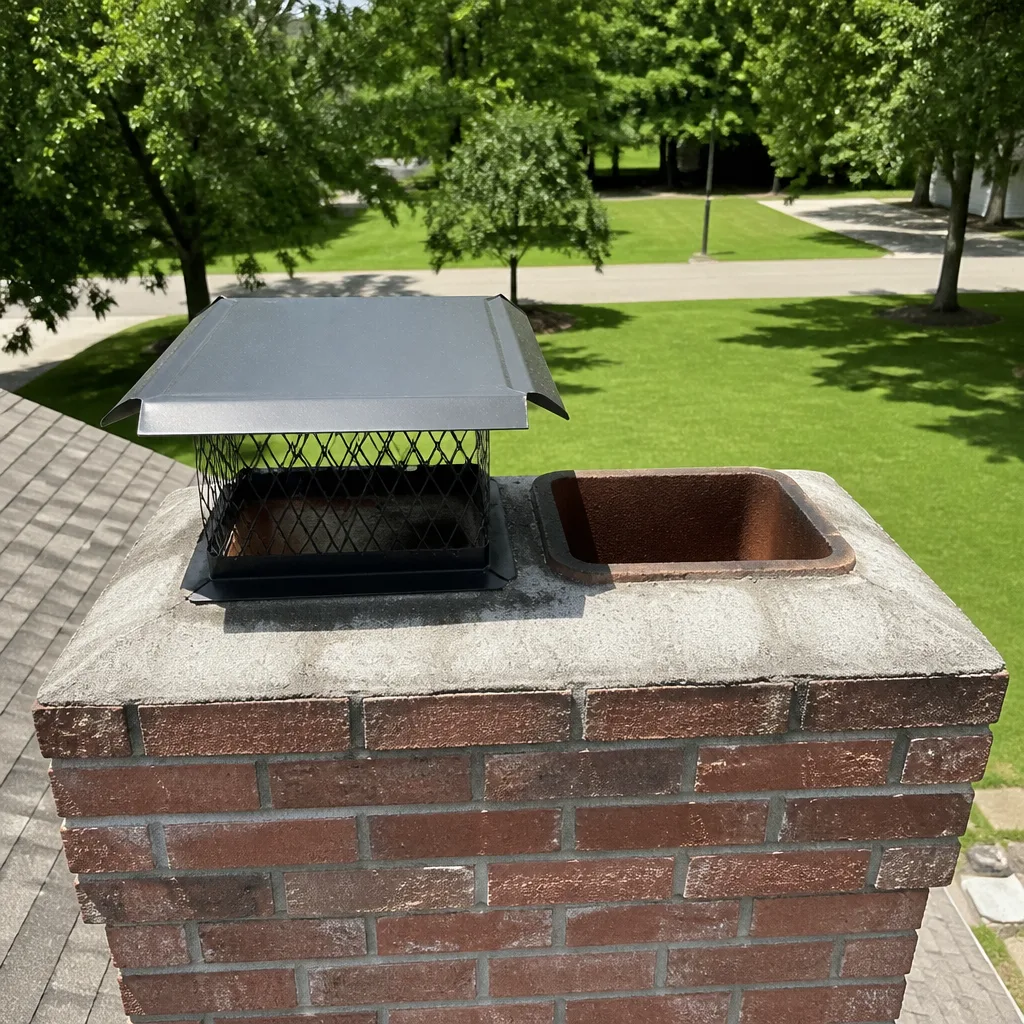 Sweep & inspection
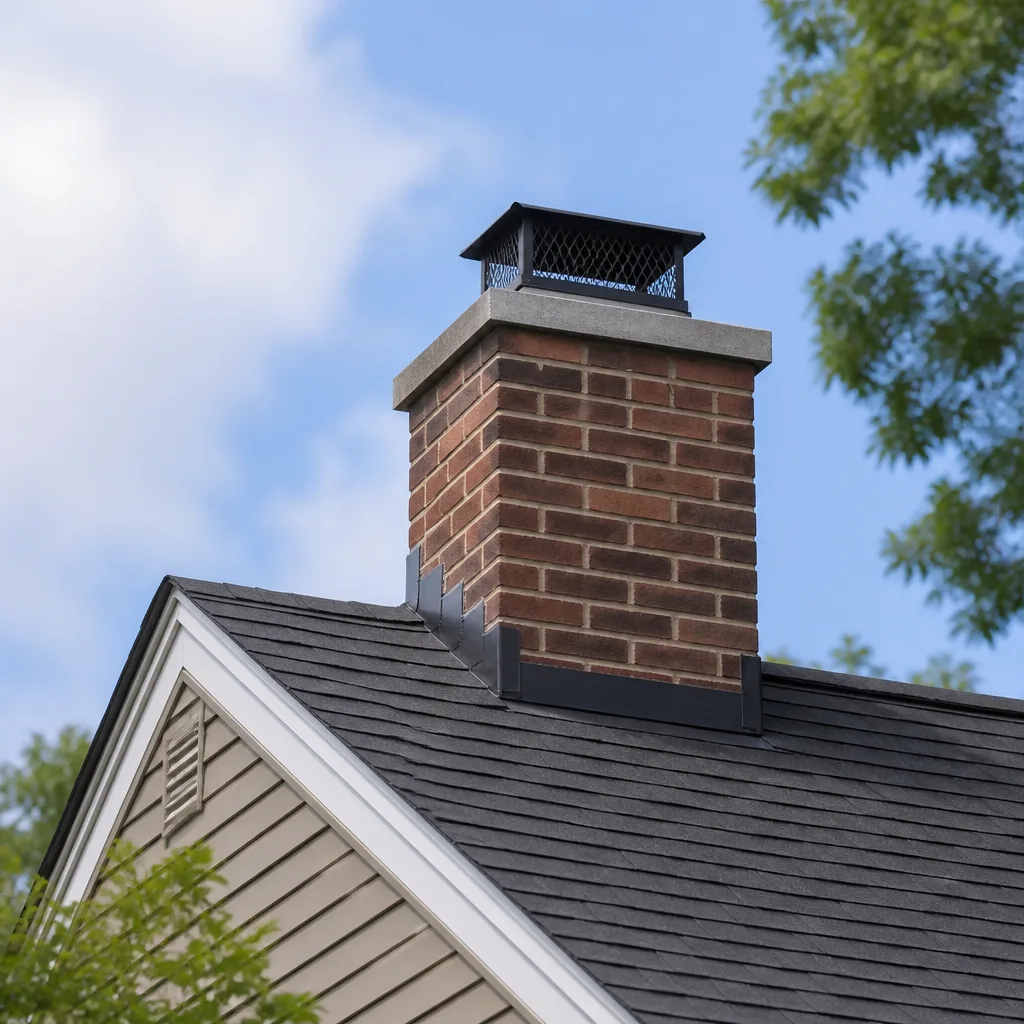 Caps & crowns
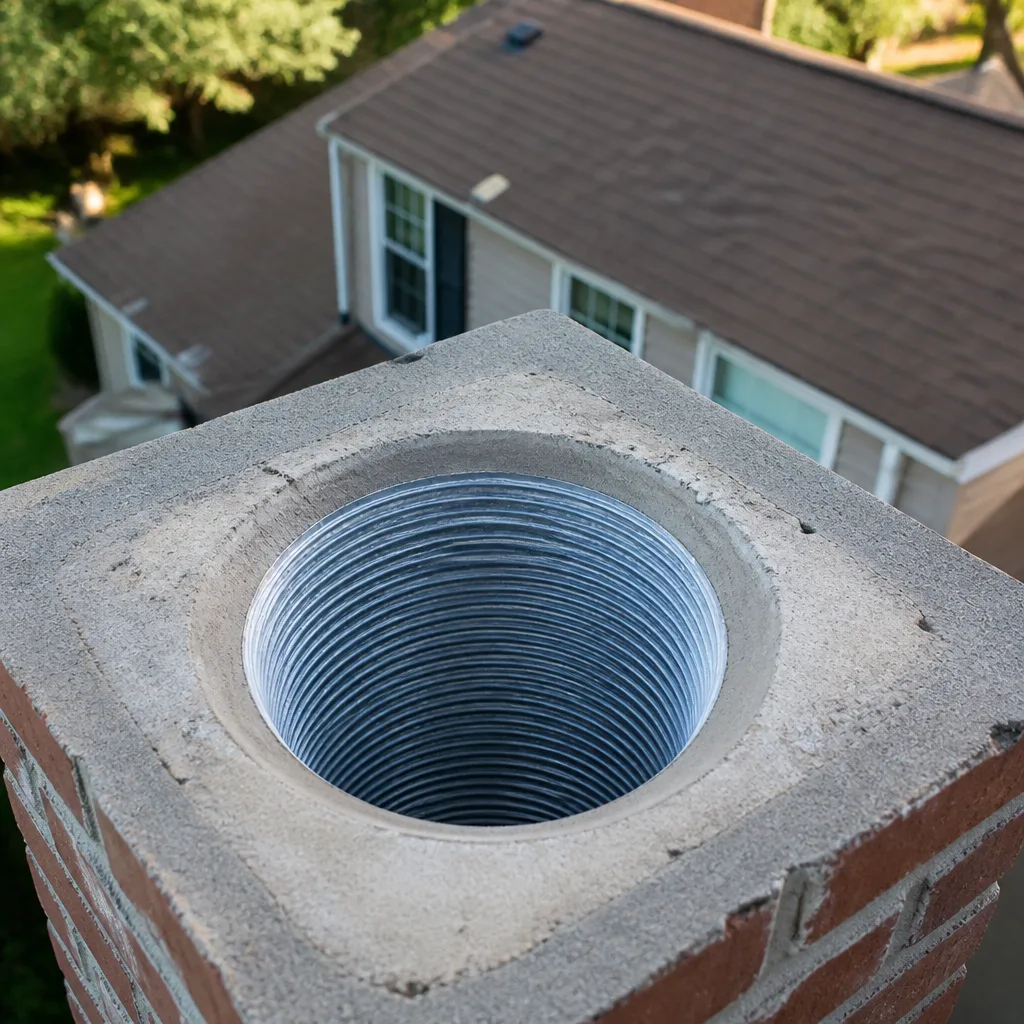 Flue relining
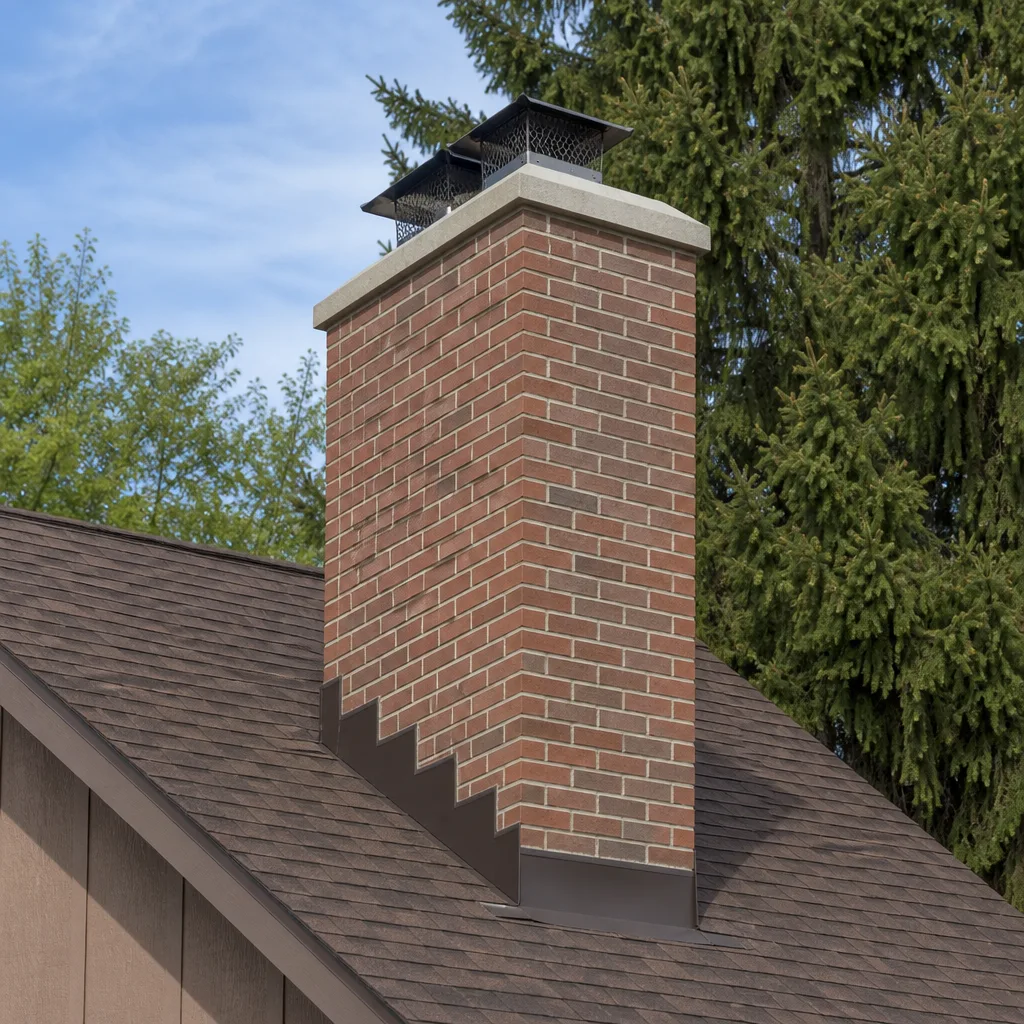 Masonry repair
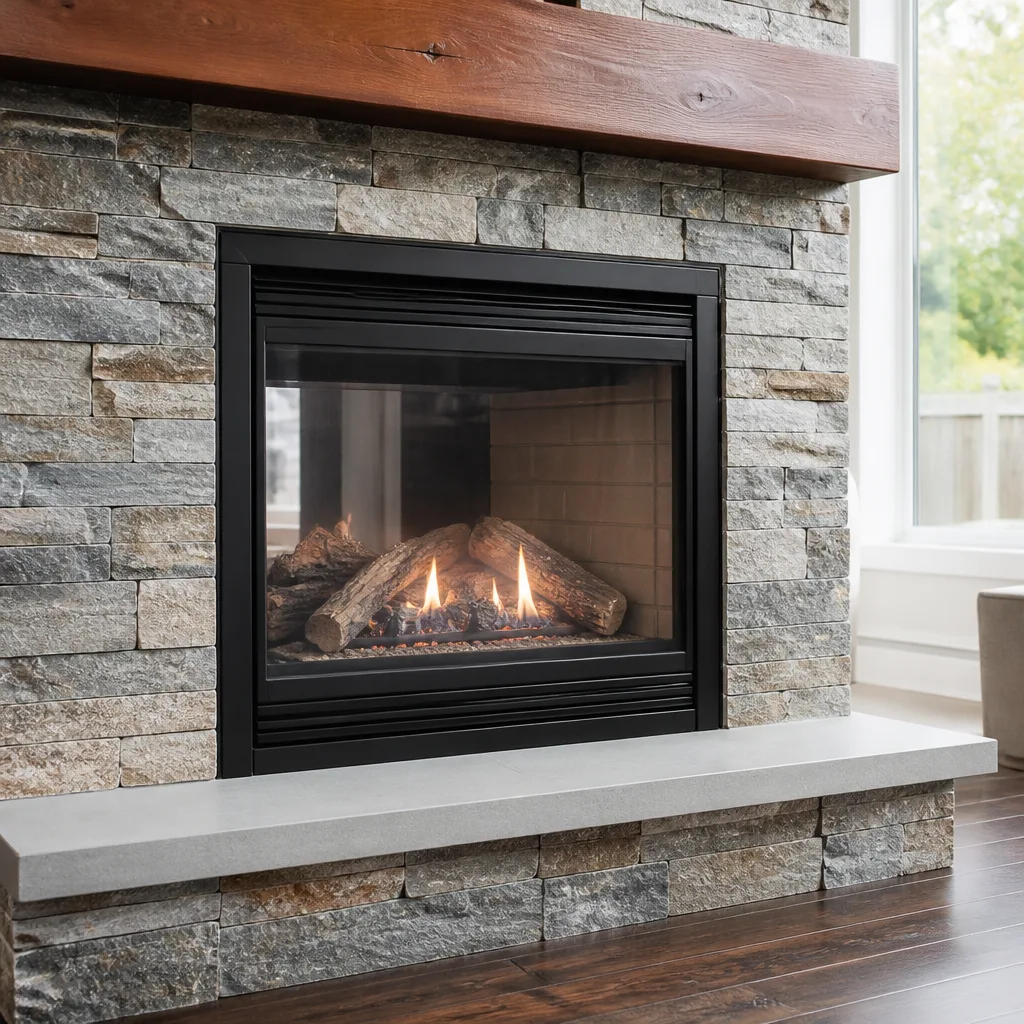 Gas fireplace service
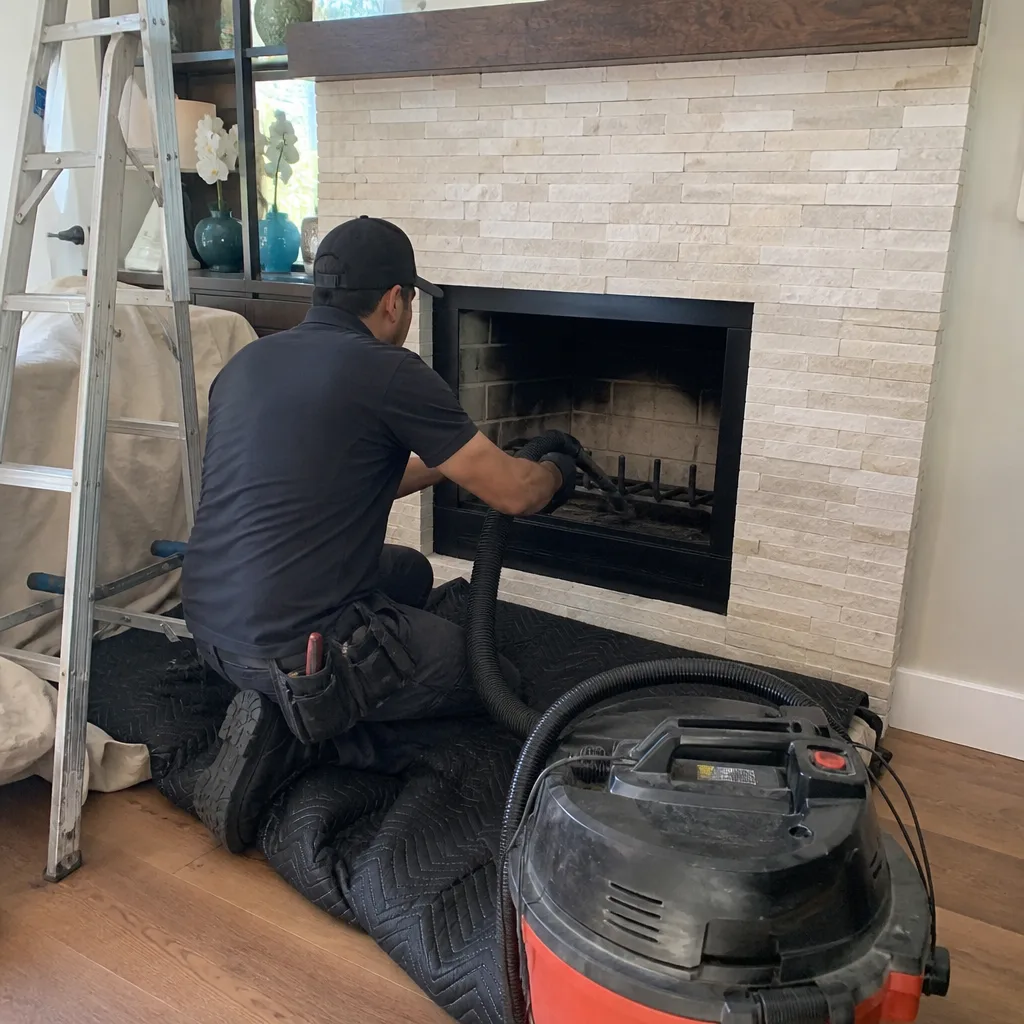
Level 1 sweep and inspection to the NFPA 211 annual standard - flue, crown, cap, and flashing checked and photographed
Chimney sweep logs do not sweep chimneys. They loosen some creosote - which then falls where a brush and vacuum still have to collect it.
Chimney Sweep Maintenance Checklist for Pacific Beach Homeowners
A cracked crown or spalled brick isn’t a cosmetic issue. It’s an open path for moisture to reach the smoke chamber liner, and in Pacific Beach’s year-round damp air, that damage compounds faster than homeowners expect. Salt-laden fog, marine layer mornings, and occasional heavy winter rain work on masonry chimneys in ways that inland chimneys never experience. This guide gives Pacific Beach homeowners a condition-based maintenance framework. You’ll learn what to check from the ground, what to log after each service visit, and how to spot the difference between harmless surface staining and damage that needs professional attention before it becomes a liner replacement.
Quick Answer
A chimney maintenance checklist for Pacific Beach homes should be organized by observable conditions, not calendar dates. Exterior checks focus on the crown, mortar joints, brick faces, and the chimney cap’s screen mesh. Interior checks include damper operation, smoke shelf debris accumulation, and creosote deposit thickness. In Pacific Beach’s coastal climate, visual inspections every 60 to 90 days during fireplace season and one professional sweep per cord of wood burned is the minimum that keeps a chimney functioning safely.
Styles & brands we work with
- Sweep & inspection
- Caps & crowns
- Flue relining
- Masonry repair
- Gas fireplace service
Table of Contents
- Exterior Checkpoints You Can See From the Ground
- Reading Moisture Indicators: Efflorescence, Spalling, and Mortar Color
- Interior Checks Any Homeowner Can Safely Perform
- What a Light Deposit Looks Like vs. a Cleaning-Threshold Deposit
- The Chimney Cap and Screen Mesh: Your First Line of Defense
- Record-Keeping: What to Log After Every Service Visit
- Pacific Beach’s Seasonal Rhythm and Why It Defies Calendar-Based Schedules
- Common Mistakes to Avoid
- When to Call a Professional
- Frequently Asked Questions
Exterior Checkpoints You Can See From the Ground
Most chimney deterioration in Pacific Beach announces itself visually long before it becomes a structural problem. You don’t need to climb on the roof. A pair of binoculars and five minutes on the sidewalk or in the backyard will surface 80% of what a professional sweep finds during an exterior inspection. Here’s what to look for, in order of importance.
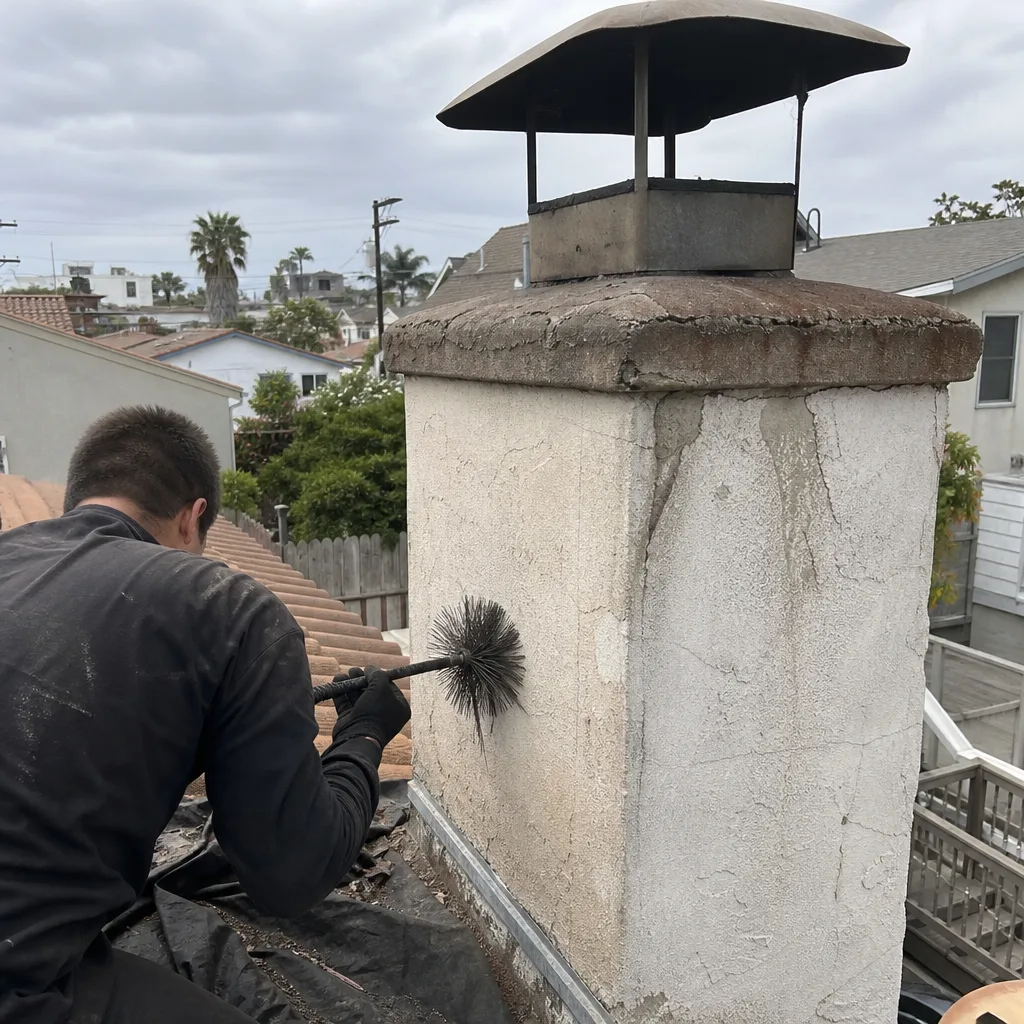
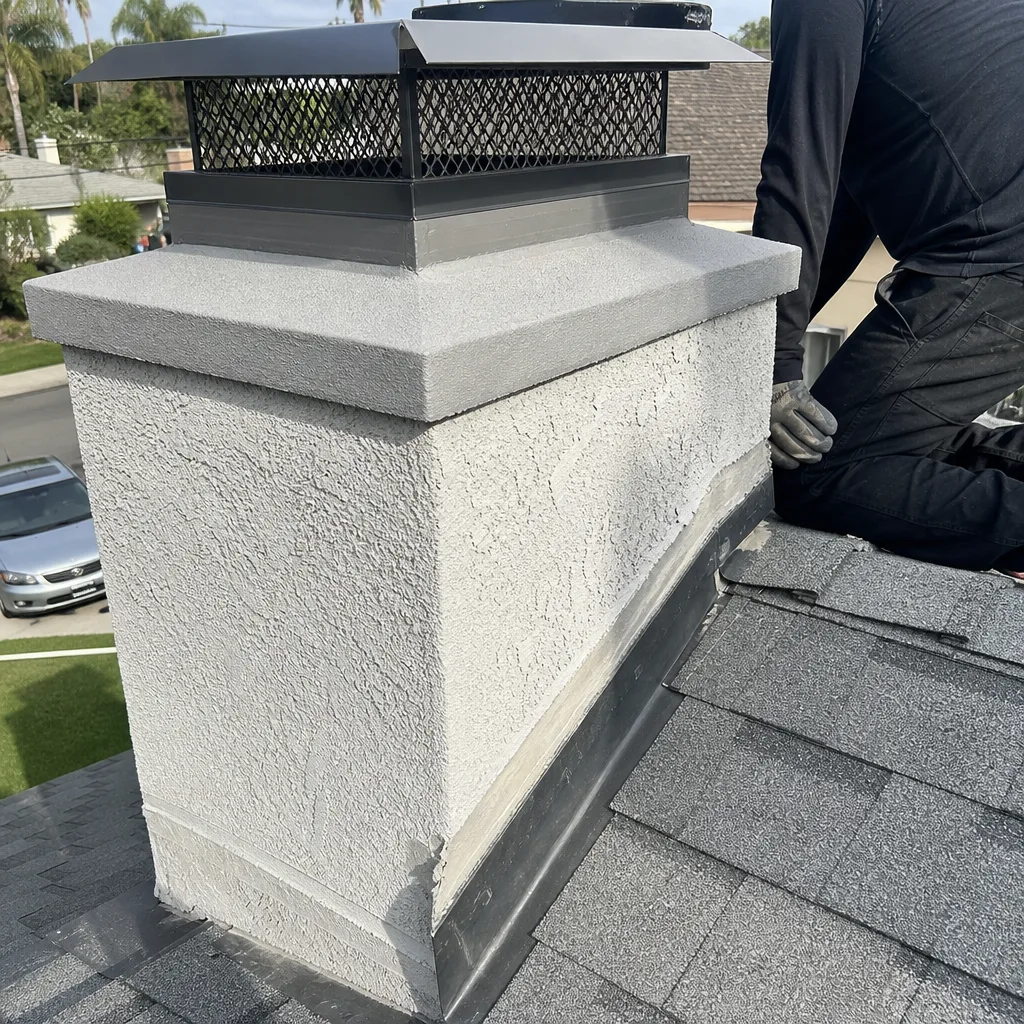
- The crown. This is the concrete or mortar slab at the very top of the chimney. Look for hairline cracks, pieces missing from the edges, or a surface that’s begun to crumble. In Pacific Beach, the crown takes direct hits from salt fog and rain. A cracked crown lets water run down through the chimney’s interior, where it attacks the mortar between flue tiles and accelerates liner deterioration. Crown cracks wider than a dime are worth having evaluated.
- Mortar joint color. Run your eyes along the horizontal and vertical mortar lines between bricks. In Pacific Beach chimneys, mortar that was originally light gray often darkens unevenly, with some joints turning brown or black while others stay pale. That color shift means moisture retention. The dark joints are holding water longer than they should. Over time, those joints soften, then erode, then let bricks shift.
- Brick faces. Look for bricks whose faces have popped off, leaving a rough inner texture exposed. This is spalling, and it’s what happens when salt and water work into brick pores, then the salt crystallizes and breaks the surface apart. Spalled brick can’t be repaired by repointing alone. The damaged bricks typically need replacement, and the cause of the moisture entry needs to be identified first.
- The cap and screen mesh. Confirm the chimney cap is still sitting level and hasn’t been knocked askew by wind or birds. Check the screen mesh around the cap. You’re looking for holes, rust-through, or mesh that’s pulled away from the frame at one corner. In Pacific Beach, that mesh is doing more work than you might think. It keeps out nesting birds, leaves from eucalyptus and palm trees, and wind-blown marine debris. Damaged mesh means open access.
- Flashing at the roofline. If you can see where the chimney meets the roof from the ground, check that the sheet metal flashing is lying flat against both surfaces. Lifted or corroded flashing is a common Pacific Beach problem, especially on older homes where galvanized flashing has been in place for 20 plus years. Flashing failures let water run down the outside of the chimney and into the attic, which shows up as brown stains on ceilings or walls near the chimney chase.
If you’re not sure what you’re looking at, that’s normal. Most Pacific Beach homeowners have never been told what a healthy crown looks like versus one that’s failing. A Chimney Sweep in Pacific Beach can walk you through the exterior condition on the day of your sweep and photograph what they find, so you have a baseline to compare against next year.
Reading Moisture Indicators: Efflorescence, Spalling, and Mortar Color
Pacific Beach sits in a narrow band where ocean air, marine fog, and salt spray interact with masonry differently than they do even three miles inland. The moisture doesn’t just sit on the surface. It gets pulled into the brick and mortar through capillary action, carrying dissolved salts with it. Those salts then do two things: they attract more moisture, and they crystallize inside the masonry pores, creating internal pressure that breaks the material apart from the inside. This is why Pacific Beach chimneys often show damage patterns that look premature compared to the same-aged chimney in Clairemont or La Jolla.
Three moisture indicators matter most:
- Efflorescence: A white, chalky, crystalline deposit on the brick or mortar surface. It looks like someone dusted the chimney with powdered sugar. Efflorescence means water has moved through the masonry and evaporated on the surface, leaving dissolved minerals behind. Light efflorescence after a wet winter is common and often harmless. Heavy, recurring efflorescence that builds up in the same spots year after year means ongoing water intrusion, and that requires finding the source, not just brushing off the powder.
- Spalling: This is the brick or stone face popping off in sheets or chunks. The cause is almost always moisture plus salt crystallization, not impact damage. A chimney doesn’t get hit by anything. When you see spalling, water has been cycling through the brick for years. Spalled brick cannot be sealed back together. The damaged units need replacement, and the moisture entry point above them – usually a failed crown or missing cap – needs correction first.
- Mortar color shift: Joints that run dark, stay dark after rain, or show green or black staining are holding moisture. In Pacific Beach, that darkening is often the first visible cue that repointing will be needed within a few years. Mortar that dries evenly back to its original color is doing its job. Mortar that stays dark is saturated, and saturated mortar in a salt-air environment degrades at roughly twice the rate of dry mortar.
None of these conditions fix themselves. They all follow a progression: efflorescence first, then mortar softening, then spalling, then structural movement. Catching them at the efflorescence stage costs a few hundred dollars to address. Catching them at the spalling stage costs thousands. A professional evaluation during your next Chimney Sweep Pacific Beach home visit will tell you where on that continuum your chimney sits.
Interior Checks Any Homeowner Can Safely Perform
You don’t need to climb on the roof to assess your chimney’s interior condition. Three checks can be done from inside the house, and they surface the most common functional problems Pacific Beach homeowners encounter. None of these involve touching the flue interior, working near electrical components, or getting on a ladder.
- Damper operation. Open the damper fully, then close it fully. It should move smoothly through the full range, with resistance but not binding. A damper that sticks, squeals, or won’t close completely needs attention. In Pacific Beach’s damp air, damper hinges and the surrounding cast iron frame rust faster than they do inland. A damper that can’t fully close lets conditioned air escape up the chimney year-round and lets moist ocean air drop down into the firebox during the summer.
- Smoke shelf debris check. Shine a flashlight up into the chimney from inside the firebox. You’re looking at the smoke chamber area, above the damper opening. If you see accumulated dark flaky material sitting on the smoke shelf, that’s creosote plus any wind-blown debris that’s dropped down past the cap. A thin dusting is normal. Piles, clumps, or anything that looks like it’s built up more than the thickness of a coin is worth a closer look by a professional.
- Odor patterns. Pacific Beach’s high humidity makes chimney odors more noticeable than they are in dry climates. A fireplace that smells strongly of soot, dampness, or creosote on a humid morning – especially after rain or during heavy marine layer – is telling you something. Moisture has gotten into the flue and is saturating the creosote deposits. That odor is a warning sign, not just an annoyance. It means water entry is active, and the wet creosote is accelerating the deterioration of the flue liner.
We’ve found that Pacific Beach homeowners who track these three checks seasonally catch chimney problems six to twelve months earlier than those who wait for the annual sweep. That timing difference routinely turns a $300 repair into a $3,000 repair, because early intervention is cheaper than structural reconstruction.
If your damper is rusted or your smoke shelf is loaded with debris, the next step is a professional inspection. A Chimney Repair in Pacific Beach technician can evaluate the full system and tell you whether the issue is isolated or part of a broader water entry problem. Catching a damper at the rust stage is far less expensive than replacing a rusted-out damper frame a year later.
What a Light Deposit Looks Like vs. a Cleaning-Threshold Deposit
Creosote isn’t one uniform substance. It changes form based on flue temperature, wood moisture content, and how the fire burns. Knowing what you’re looking at helps you decide whether a sweep is urgent or can wait a few weeks. This is the most common maintenance question we hear from Pacific Beach fireplace owners.
A light deposit looks like a fine, dusty coating on the flue walls. It’s gray to light brown, it’s thin enough that you can still see the texture of the flue tile or metal beneath it, and it wipes off with a finger. Light deposits are normal after a dozen or so fires, especially with well-seasoned hardwood. A light deposit doesn’t mean the chimney is dangerous. It means the flue is due for cleaning in the near term to prevent buildup from progressing.
A cleaning-threshold deposit has moved past that. It appears as a black, tar-like glaze that’s visibly thick, often with a shiny or puffed texture. In severe cases it builds up in the shape of drips or stalactites hanging down from the flue walls. This is third-degree creosote. It’s dense, it’s highly combustible, and it cannot be removed by standard brush sweeping in many cases. It requires chemical treatment or mechanical removal with specialized tools. Any deposit that’s black, shiny, and thicker than about an eighth of an inch means the chimney should not be used until it’s cleaned.
The in-between zone – brown to dark brown, flaky rather than tar-like, building up in layers – is second-degree creosote. This is the most common stage we see in Pacific Beach chimneys, particularly in homes that burn a mix of hardwoods and occasional unseasoned wood. Second-degree creosote should trigger scheduling a sweep, especially if it’s been more than a cord of wood since the last cleaning.
A useful rule of thumb: one professional sweep per cord of wood burned. A cord is 128 cubic feet of stacked firewood, roughly a pickup truck bed full. Pacific Beach homes that use the fireplace for ambiance on weekends might burn half a cord per season. Homes that use the fireplace as a primary heat source on cold coastal nights can burn two or more cords. Your burn rate determines your sweep interval.
The Chimney Cap and Screen Mesh: Your First Line of Defense
The chimney cap is the most underappreciated component on a Pacific Beach chimney. It does three distinct jobs, and when it fails, the failures compound quickly. Most homeowners don’t think about the cap until a bird gets into the house or water stains appear on the ceiling.
The first job is rain exclusion. A properly sized cap with a solid top keeps rain from falling straight down into the flue. In Pacific Beach’s wet winters, a missing or damaged cap can put gallons of water directly into the chimney system over the course of a season. That water doesn’t just evaporate. It mixes with creosote to form an acidic slurry that attacks mortar joints and flue tile surfaces.
The second job is spark containment. The screen mesh around the cap’s perimeter catches embers that rise with the draft. Those embers land on your roof, your neighbor’s roof, or the dry brush of the canyons that edge Pacific Beach. California wildfire risk makes spark containment a genuine safety function, not a building code checkbox. A cap with missing or damaged mesh is a fire hazard.
The third job is animal and debris exclusion. Pacific Beach sits directly under a major migratory flyway. Birds looking for nesting cavities will take any opening they can find, and an uncapped or damaged chimney is a perfect cavity. We’ve removed nests from Pacific Beach chimneys built over a single spring season, with the birds arriving in March and the homeowners discovering the problem in June when smoke wouldn’t draw properly. Screen mesh with openings sized correctly for your flue keeps birds, squirrels, and wind-blown debris from entering the system.
Check the cap and mesh as part of your exterior visual inspection. Look for mesh that’s been pushed inward by bird pressure, rusted through at the corners, or bent away from the cap frame. Any breach means the cap needs repair or replacement. The cost of a new cap is a small fraction of what a bird’s nest removal plus smoke damage restoration runs.
For homeowners considering a liner replacement or cap upgrade, we specify components from brands like Olympia Chimney and Famco – see Choosing the Right Chimney Cleaning Brand: A Buyer’s Guide for Pacific Beach. These are the same product lines professional chimney contractors order through trade suppliers, not what’s on the shelf at a big-box hardware store. The difference shows up in gauge thickness, mesh durability, and fit tolerances.
Record-Keeping: What to Log After Every Service Visit
Most homeowners get a chimney swept, pay the bill, and never think about the details until next year. That’s a missed opportunity, because a simple log turns today’s service into next year’s early warning system. In Pacific Beach, where environmental conditions accelerate deterioration, tracking changes over time is the single most useful maintenance habit you can build.
After every sweep or inspection, record the following:
- Date and service type. Sweep, inspection, repair, liner treatment, cap replacement. Be specific. “Chimney work” tells you nothing a year later.
- Creosote level found. Was it light, moderate, or heavy? What stage? This tells you whether your burn habits or wood supply need adjustment.
- Moisture findings. Any evidence of water entry, damp flue walls, efflorescence on exterior brick, or flashing concerns. Note the location.
- Repairs performed or recommended. What was fixed, and what was flagged for future attention. If nothing was needed, write that down too. A clean bill of health is useful data.
- Cubic feet of wood burned since last visit. Track this loosely. It’s the most reliable predictor of when you’ll need the next sweep.
- Photos. If your service provider photographs the flue interior, keep those images filed with the log. Flue conditions visible in pictures are easier to compare year over year than written descriptions.
This log does two things. It gives you a factual baseline so you can tell whether a condition is getting worse, stable, or improving. And it gives any future service provider an instant history of the chimney, which makes their work faster and more accurate.
We build this documentation into every service visit for Pacific Beach customers. You get a written report plus images of the flue interior, so you’re not relying on memory when next season rolls around. If you need dryer vent service in the future, we also provide Dryer Vent Cleaning in Pacific Beach as part of the same visit when requested, because the same record-keeping logic applies to that system.
Pacific Beach’s Seasonal Rhythm and Why It Defies Calendar-Based Schedules
Most chimney maintenance guides are written for a four-season climate: burn in winter, clean in spring, inspect in fall, rest in summer. That model doesn’t fit Pacific Beach. Our fireplaces see use during the damp winter months and the foggy early-summer evenings. Our chimneys sit exposed to salt air year-round. Our dry season, when the marine layer retreats, is actually when masonry dries out fastest and cracks from previous moisture cycles become most visible.
Pacific Beach’s real seasonal rhythm looks like this:
- Late fall through early spring: Primary burn season. Chimneys accumulate creosote during these months, and the highest-use fireplaces will need a sweep either mid-season or immediately after.
- Late spring and early summer: May gray and June gloom keep humidity high. This is when odor problems surface and when existing cracks continue to take on moisture. It’s also when birds are most actively looking for nesting sites.
- Late summer through early fall: The warmest, driest stretch. Masonry dries out, which reveals cracks that were invisible during damp months. This is the best time for exterior visual inspections, because moisture indicators like efflorescence and joint discoloration are at their most legible.
None of this lines up cleanly with “clean before burn season” advice written for New England chimneys. A Pacific Beach chimney that gets a sweep in October will be at creosote-threshold by February if the fireplace sees regular use. A Pacific Beach chimney that gets a sweep in March will sit through the entire summer accumulating nothing, then be perfectly positioned for the next burn season. In our experience, the February-to-March sweep window makes the most sense for regular-use fireplaces in this climate, with a follow-up visual inspection in August or September when the masonry is driest.
The condition-based framework matters more than the calendar. Track what you observe, act when a condition appears, and let the chimney tell you when it needs attention rather than imposing an arbitrary schedule on it.
Common Mistakes to Avoid
- Waiting until you smell smoke indoors. By the time smoke backs up into the room, the flue is either heavily restricted or there’s a draft problem that has been developing for months. Pacific Beach homes with older chimneys often have marginal draft to begin with, and by the time you notice it, you’re already breathing combustion byproducts indoors.
- Ignoring efflorescence because it’s “just cosmetic.” That white powder is the earliest visible sign of moisture moving through the masonry. Ignored, it becomes spalling. Spalling becomes structural repair. The cosmetic stage is the cheapest stage.
- Skipping the cap inspection because it’s on the roof. You can check the cap from the ground with binoculars. A cap that’s been damaged for a full season is an open doorway for water, birds, and debris. The inspection costs nothing, but the unaddressed damage never repairs itself.
- Burning unseasoned wood because it was cheap or free. Wet wood burns cool, and cool fires deposit creosote far faster than hot fires. If you’re in a moisture-prone climate like Pacific Beach, the margin for error is thinner. One cord of wet wood can deposit more creosote than three cords of properly seasoned hardwood.
- Using the fireplace as a trash incinerator. Burning paper, cardboard, pizza boxes, or wrapping paper creates cool, sooty fires and deposits unburned material throughout the flue. Plus, the dyes and coatings on manufactured paper produce corrosive byproducts. Only burn dry, seasoned firewood.
- Assuming a fireplace that “seems fine” is fine. Most of what happens inside a chimney is invisible from the living room. The first time a Pacific Beach homeowner notices a problem it’s often during a chimney fire, not during normal use. Regular cleaning and inspection is how you avoid discovering problems through emergency events.
When to Call a Professional
Call a professional if you see any of the following: crown cracks wider than a dime, spalled brick faces, persistent efflorescence, damper that won’t close fully, smoke shelf accumulation thicker than a coin, black shiny creosote on the flue walls, visible water staining on walls or ceilings near the chimney, or any sign that animals have entered the flue. None of these conditions are safe to self-assess beyond a visual check, and most require tools and training to address correctly. You should also schedule a professional inspection if you’ve just purchased a Pacific Beach home and the chimney’s service history is unknown, or if it’s been more than two years since the last sweep regardless of how often the fireplace has been used. Chimney Sweep Pacific Beach offers free estimates in Pacific Beach – call (866) 282-7711.
Frequently Asked Questions
One professional sweep per cord of wood burned is the standard interval, which translates to annual for most regular-use Pacific Beach fireplaces. Homes that burn more than a cord per season may need a mid-season sweep. Homes that use the fireplace rarely still need a professional inspection every two years, because moisture and pest issues develop regardless of burn frequency.
Standard chimney sweeps in Pacific Beach typically run between $180 and $300, depending on flue type, creosote condition, and whether additional services like cap replacement or dryer vent cleaning are added. Exact quotes require a visual inspection, since heavy creosote or blockages change the scope. Call (866) 282-7711 for a free estimate.
You can clear loose surface creosote with a DIY brush kit, but you can’t assess the flue’s structural condition, remove second or third-degree creosote, or spot liner damage from inside the firebox. Most Pacific Beach chimneys are taller and harder to access than DIY kits accommodate, and working on a roof near a flue opening is dangerous without proper gear. A professional sweep includes a full flue inspection, not just brushing.
A Level 1 inspection is the standard visual check performed during a routine sweep, covering the readily accessible portions of the flue and exterior. A Level 2 inspection uses video scanning equipment to examine the flue interior in detail, and it’s required whenever the home is being sold, the fireplace has been dormant for years, or a chimney fire has occurred. Pacific Beach home purchases routinely require a Level 2 inspection as part of escrow.
A new liner is needed when the existing flue has cracks, gaps between tile sections, or advanced creosote damage that can’t be repaired with resurfacing. In many cases, a liner that’s beginning to deteriorate can be restored with HeatShield resurfacing, which coats the interior of the compromised flue and extends its life without full replacement. Full replacement and flexible liner installation are the next tier when the damage is too extensive.
Yes. Pacific Beach’s salt-laden marine air accelerates masonry deterioration compared to inland locations. The combination of moisture absorption, salt crystallization, and the natural freeze-thaw absence that would otherwise cleanly crack weak mortar means deterioration here is steady rather than seasonal. A chimney that sits exposed for two or three years without attention will show measurable wear, especially on the crown and upper brick courses.
The Bottom Line
A Pacific Beach chimney needs condition-based attention, not calendar-based. Check the exterior monthly during burn season: crown, mortar, brick faces, cap and mesh. Check the interior at least twice per season: damper movement, smoke shelf buildup, odor patterns. Log everything after each professional visit, including creosote level, moisture findings, and repairs. One sweep per cord of wood is the cleaning standard, and a professional inspection every two years is the minimum even for rarely used fireplaces. When you see efflorescence, spalling, thick black creosote, or evidence of water entry, don’t wait. The cost of addressing a chimney problem early is a fraction of what it costs to repair a structurally compromised system two years later.
Written by the team at Chimney Sweep Pacific Beach, serving Pacific Beach since 2012. Explore more guides & resources.
See the difference
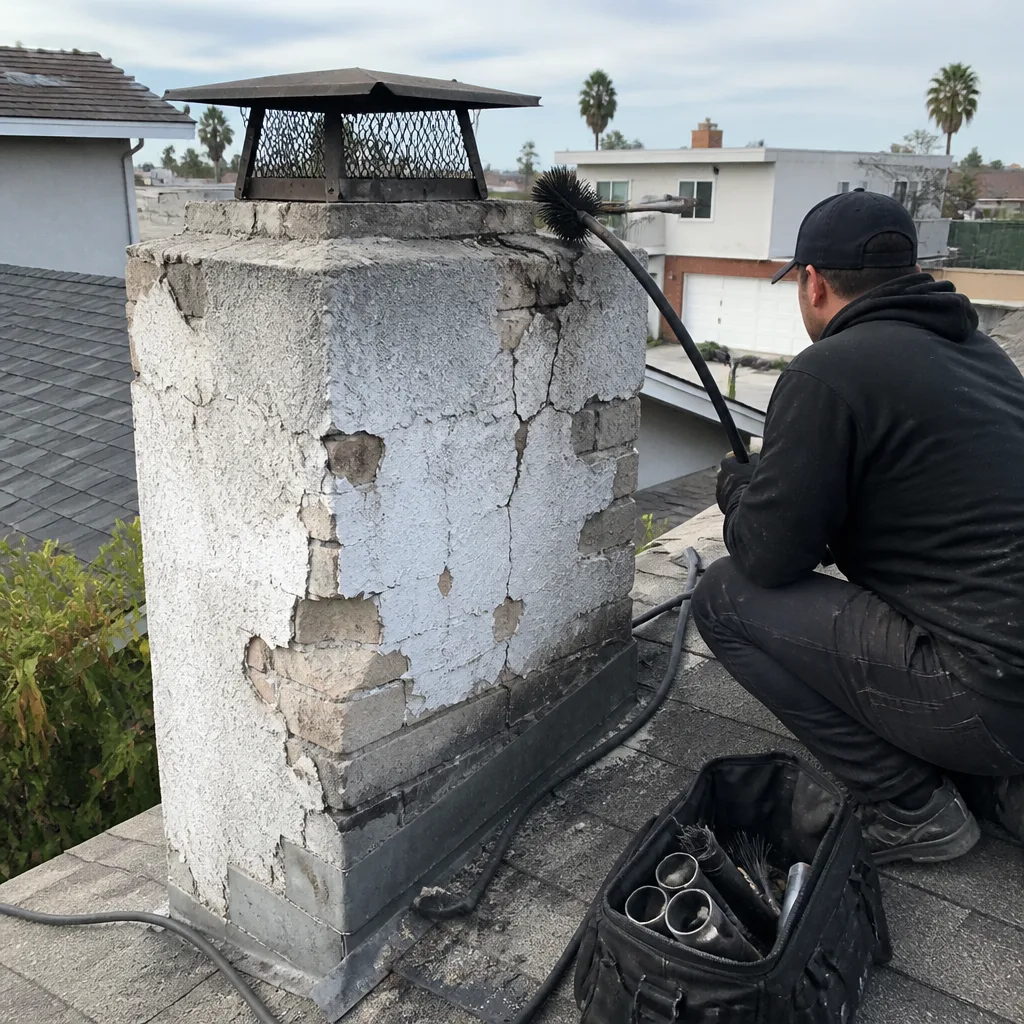 Before
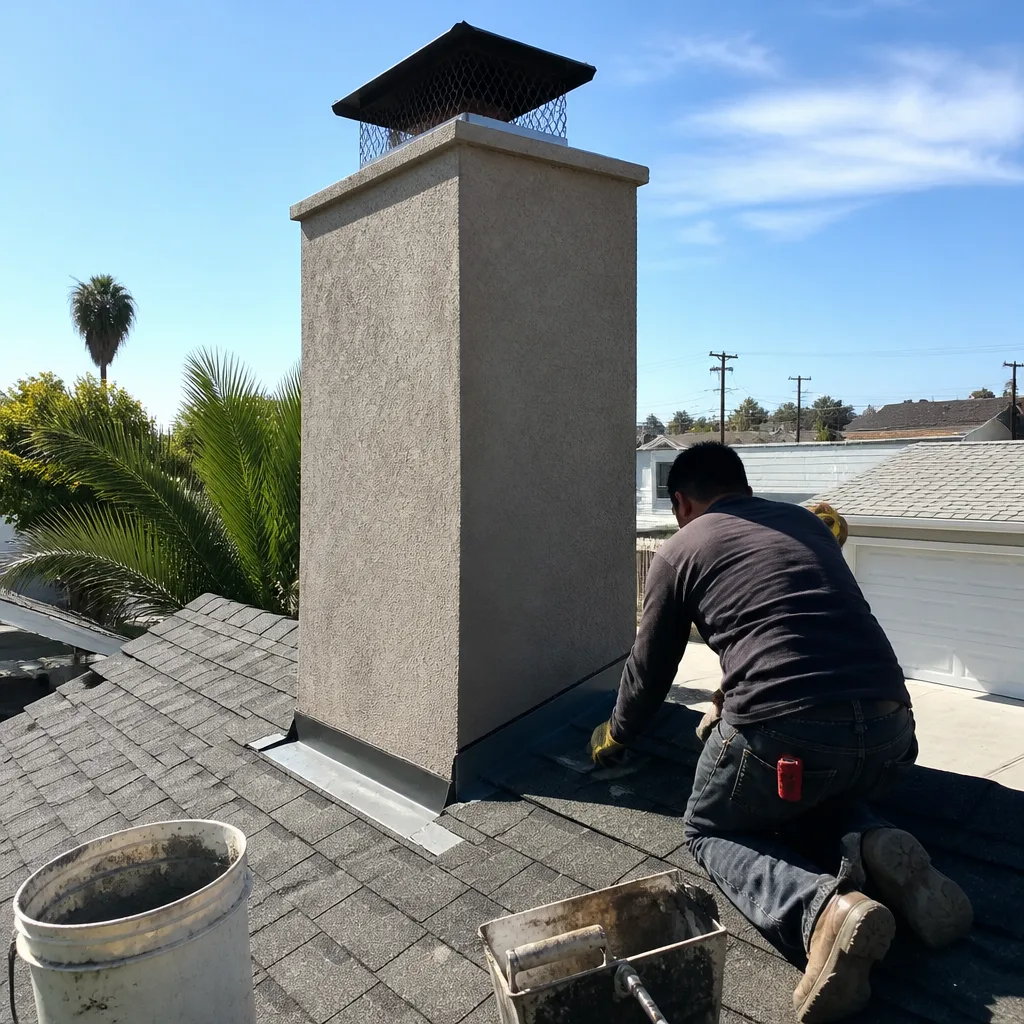 After
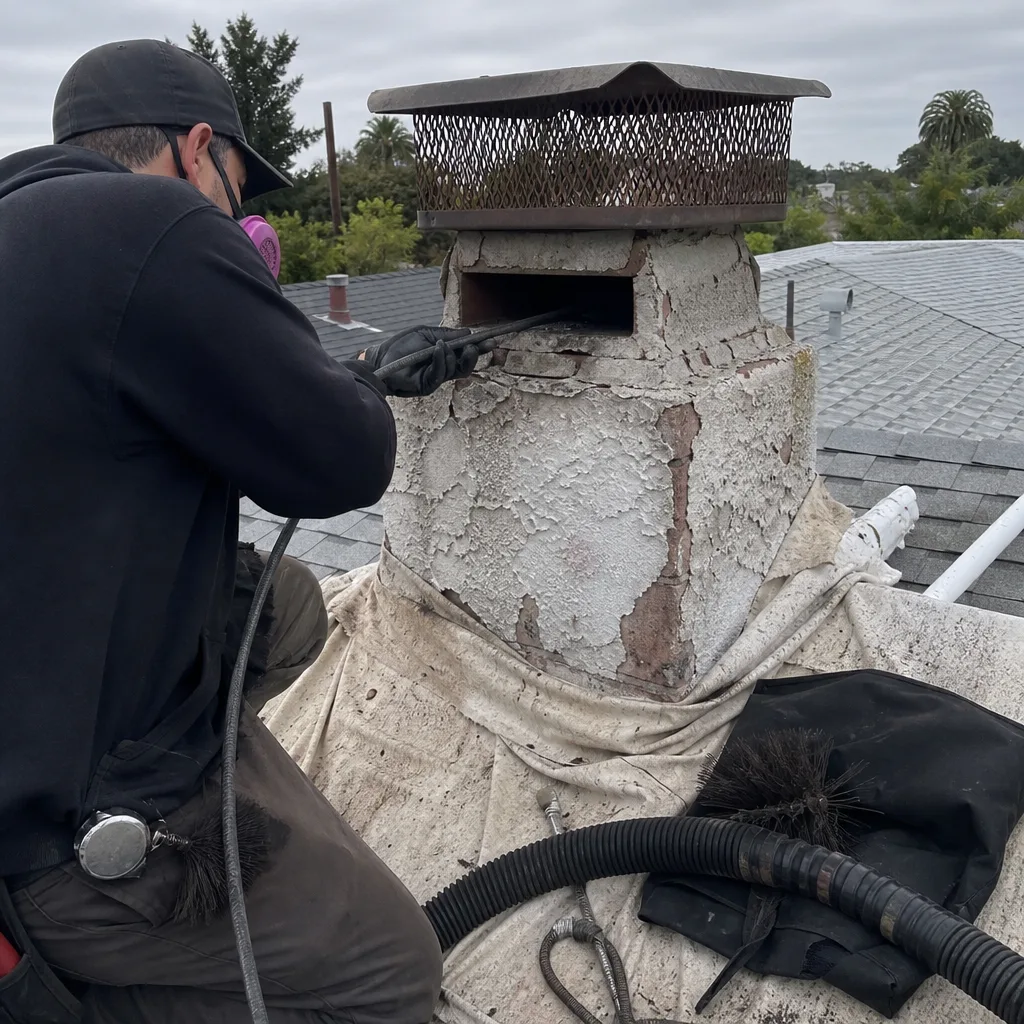 Before
 After
 Before
 After